Houston’s Buffalo Bayou: Buildings in Parks
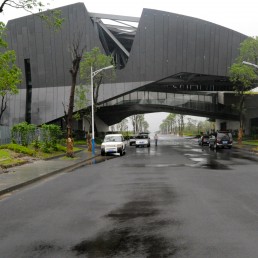
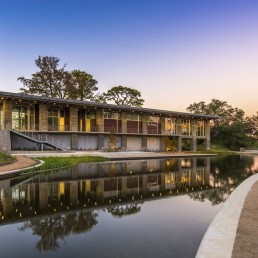
I am a big fan of parks. My local park in Austin is Zilker Park with its famous Barton Springs Pool. There is a beautiful 1940s bathhouse at the pool, designed by Dan Driscoll, an early Texas modernist architect. I often stage my visits to the pool at times that will require a…
Architects: Give Credit Where Credit’s Due
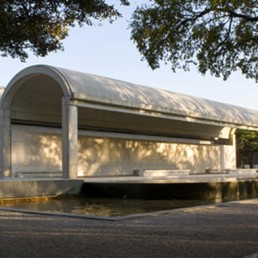
I’m always struck by the list of credits in movies. I love the way that everyone who contributes to the success of the film gets acknowledged. Making a building requires the same kind of complex collaborative enterprise as making a movie, yet for some reason, we have this…
Comparing and Contrasting Two New Museums In Michigan
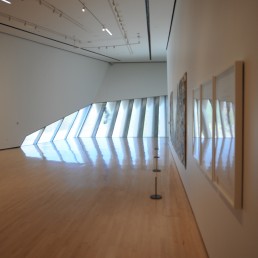
While in Michigan recently, I paid a visit to two new and strikingly different museums, both designed by well known architects: the Broad Museum by Zaha Hadid at Michigan State University, and the University of Michigan Art Museum by Allied Works. After visiting both, it…
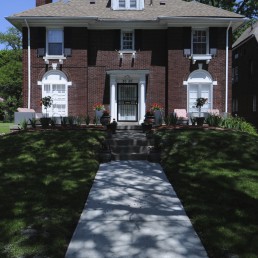
Good design endures in Detroit’s Lafayette Park
I love to revisit significant architectural projects over and over in their mature years to see how they are working and how people are using them. Alvar Aalto was fond of saying he wanted his buildings to be judged by how they looked after 50 years. I think that is a good…
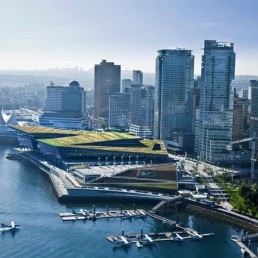
A perfect building? Quite possibly, yes.
This summer I visited Vancouver, certainly one of the most spectacular urban settings in the world. While there, I met with Mark Reddington, partner of LMN Architects of Seattle, and Ken Cretney, chief operating officer for the Vancouver Convention Centre. Ken came on board…
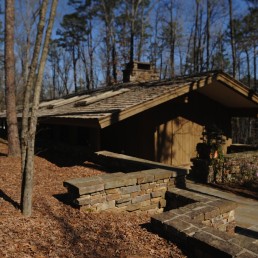
A chapel unites a couple
I recently attended the wedding of two former students that took place at the Anthony Chapel in Hot Springs, Arkansas, designed by Maurice Jennings, a former partner of Fay Jones. The influence of Jones’ celebrated Thorncrown Chapel is evident, but Jennings definitely takes the…
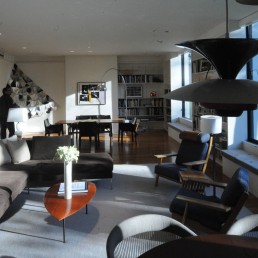
A timeless house in Dallas by Edward Larrabee Barnes
We always seem to be infatuated with newness in Architecture, and I will confess I am susceptible to the quick rush of novelty more than I would like to admit. But I am also a great admirer of timelessness—that far more potent elixir that lends Architecture an enduring depth…
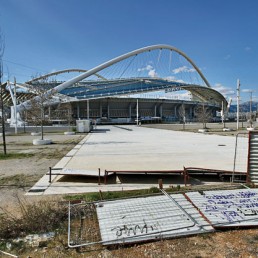
“Creative Invention”… Only for those with gobs of money?
A few lines in Nicholai Ouroussoff’s recent article in The New York Times about the new Parrish Art Museum particularly caught my attention: “The design is a major step down in architectural ambition. It suggests the possibility of a worrying new development in our time of…
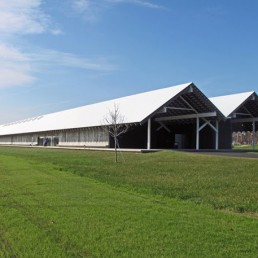
Less is so much more: the Parrish Art Museum
Over the holidays I visited the new Parrish Art Museum, in Mill Creek on Long Island. The museum, which opened a couple months ago, has a mind-boggling history. In 2006, Swiss architects Herzog & de Meuron unveiled their plans for a series of 30 angular, low-slung…
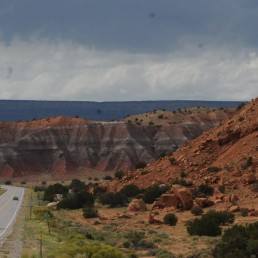
High Performing Thermal Mass in New Mexico
Increasingly, I’m more interested in what architecture does than just what it is. In a previous blog, I wrote about the new office building we designed for Wiss, Janney, Elstner Associates (WJE), in Austin, and the use of thermal mass to control temperature. We’ve now…
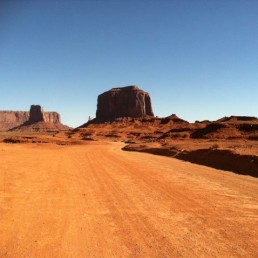
Monument Valley in Dallas?
While in Dallas last week, I took a few minutes to walk from my office to the new Arts District where there are buildings by five Pritzker-Prize-winning architects within sight of each other—Nasher Sculpture Center by Renzo Piano, Meyerson Symphony Center by I.M. Pei, Norman…
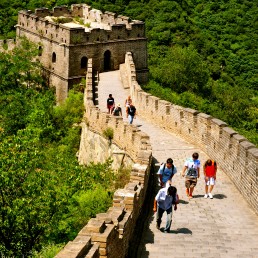
And, of course, The Great Wall
We visited the Mutianyu section of the Great Wall which is more remote and less visited than the Badaling section near Beijing. It was renovated in the 1950s and 1960s and is in an area of magnificent natural beauty.
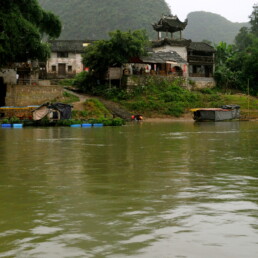
Fishing Villages on the Li River
Taking a boat up the Li River from Yangshuo is like taking a big step back into time. The villages have a slow, ancient way of life cross-bred with electronic media access and a reputation for beauty and authenticity that has brought the likes of Bill Clinton to visit. There…
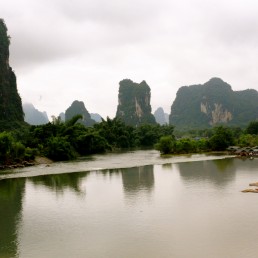
Karst Landscapes in Southern China
This is one of the most stunning landscapes in the world. The flatness of the water and the rice fields contrasting with the karst peaks that have been sculpted by weather has been the inspiration for Chinese scroll paintings for ages. The dense forests of bamboo are soft and…