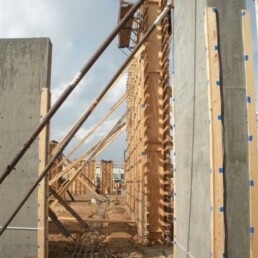
Building Envelopes: Greater Performance from Fewer Materials
A month or so ago I gave the kick-off talk at the Building Enclosure Council National Symposium, taking a very quick and dirty look at two kinds of history of building enclosures. I have had a keen interest in building enclosures since I co-chaired the Technology Conference for…
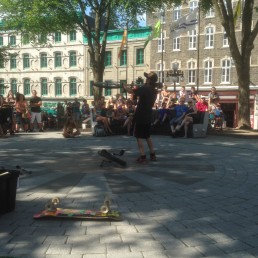
Urban Life and Walking: Pleasures in a Big City
When I travel, I love to just hang out and observe urban life – how cities support the predispositions of their residents and how city dwellers embrace their environments. I’m happy as a clam watching how crowds behave and spying on urban pedestrian life. Such was this case a…
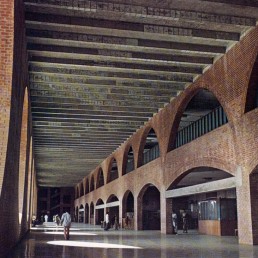
Architecture is Frozen Music at UT Rio Grande Valley Performing Arts Center
In a March 2014 blog, I discussed the construction and design of the new University of Texas Pan Am Performing Arts Center in the Rio Grande Valley. Now the building is complete and this spring saw its first concert. Following a punch list that was accomplished over the…

What does the fashion industry share with architecture? Quite a bit…
Several weeks ago, I hosted a reception at my loft in Austin for Jhane Barnes, the very well known fashion designer. I greatly admire her clothing and sense of design and was delighted to have an opportunity to talk with her for a bit before the event. Combing through my…
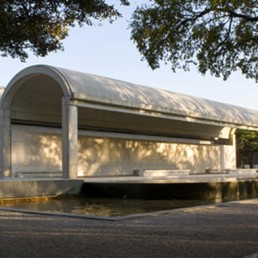
Architects: Give Credit Where Credit’s Due
I’m always struck by the list of credits in movies. I love the way that everyone who contributes to the success of the film gets acknowledged. Making a building requires the same kind of complex collaborative enterprise as making a movie, yet for some reason, we have this…
Invisible Resiliency
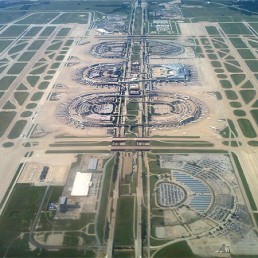
Recently, I experienced a sort of cosmic convergence of unrelated things happening. First, an 18-year old undergraduate student came to my office to discuss an essay he’s writing about a building of his choosing that he admires. He chose the Dallas Fort Worth Airport (DFW).…
Learning From What We Build
In a data-driven world, why don’t we, as architects, gather more data about the performance of our buildings—particularly in the form of post-occupancy evaluations? Wouldn’t it be a potent tool for advocacy of the importance of our profession if we could demonstrate the…
A Crystalizing Moment
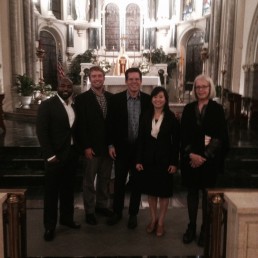
I had a crystalizing moment at the Texas Society of Architects convention in Houston last week. On Friday afternoon I attended the recognition ceremony for Newly Registered Architects that was held in a lovely historic church a few blocks from the convention center. I had been…
Comparing and Contrasting Two New Museums In Michigan
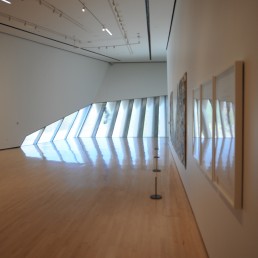
While in Michigan recently, I paid a visit to two new and strikingly different museums, both designed by well known architects: the Broad Museum by Zaha Hadid at Michigan State University, and the University of Michigan Art Museum by Allied Works. After visiting both, it…
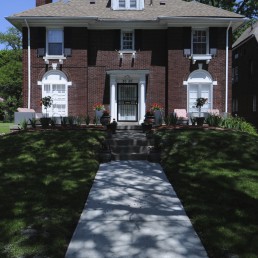
Good design endures in Detroit’s Lafayette Park
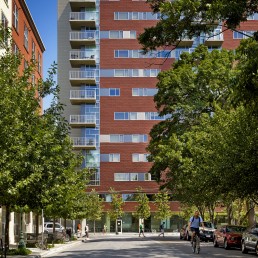
I love to revisit significant architectural projects over and over in their mature years to see how they are working and how people are using them. Alvar Aalto was fond of saying he wanted his buildings to be judged by how they looked after 50 years. I think that is a good…
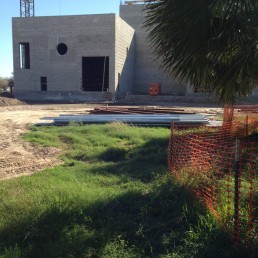
Constructing the UT Pan American Performing Arts Center
A couple of weeks ago, I visited the construction site for our new UT Pan American Performing Arts Center. We’re using load-bearing masonry walls, and at this stage, with the project half-complete, the building has the look of a modern-day Roman ruin. I love this stage of…
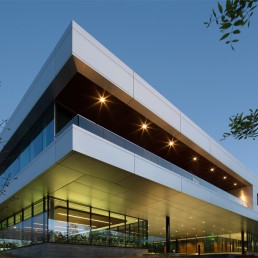
B. L. Harbert International
Having started my career with several construction jobs working for building contractors, I have always had a keen interest in how the construction industry works. The movement to construction management a couple of decades ago has certainly changed the way buildings get built.…

Our new name: Page
As an architecture and engineering firm, how do you step up your game periodically? In the life of a practice, it's important to take a snapshot and reflect upon various considerations, and that's what we've done in creating the new Page whose name and logo were revealed…

We need to do this: give credit to all
Why is it, as architects, we seem to focus exclusively on just one person’s role in the making of buildings? To read most of our professional publications, you would think a single mind conceives these things, and then they magically happen. Just as the credits roll for several…
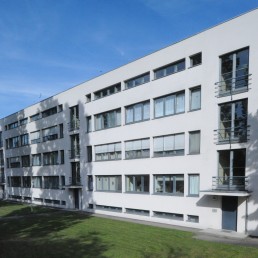
Micro-housing’s time has come … again.
Several years ago, I visited the Weissenhof Estate, an experimental residential complex built on a hillside outside Stuttgart in 1927. Some of the most recognizable names in 20th century architecture were contributors to the buildings and the project’s success, including Le…
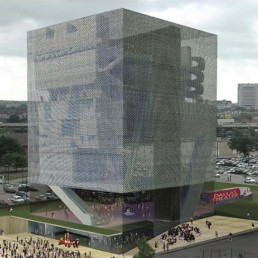
What role for architects in planning future cities?
A recent article by Aaron Betsky in Architect magazine took issue with a New York Times-sponsored program called the Energy For Tomorrow Conference. Betsky was specifically concerned that the Times had not included any "urbanists, planners, or even an architect" but did include…
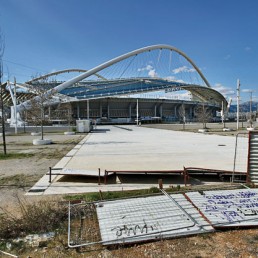
“Creative Invention”… Only for those with gobs of money?
A few lines in Nicholai Ouroussoff’s recent article in The New York Times about the new Parrish Art Museum particularly caught my attention: “The design is a major step down in architectural ambition. It suggests the possibility of a worrying new development in our time of…
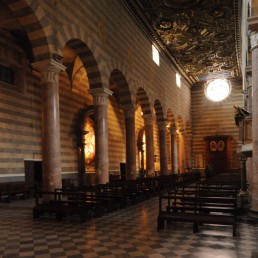
As architects, what can we learn from historic Italian art and architecture? Plenty.
I was in Italy recently, visiting one of my favorite cities, Volterra, in Tuscany. I can't go to Italy without admiring how art and architecture speak to each other there and often integrate beautifully. This is constantly evident in Volterra where the two have a potent and…

High Performing Thermal Mass in New Mexico
Increasingly, I’m more interested in what architecture does than just what it is. In a previous blog, I wrote about the new office building we designed for Wiss, Janney, Elstner Associates (WJE), in Austin, and the use of thermal mass to control temperature. We’ve now…
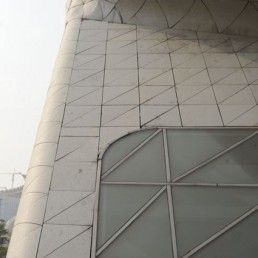
Top Architectural Record Award for Guangzhou Opera House? Really?
Architectural Record recently gave Zaha Hadid’s Guangzhou Opera House its Best Public Project: Honor Award in the Good Design Is Good Business: China competition and published it on the cover.…
Building With High Thermal Mass in Hot, Humid Climates
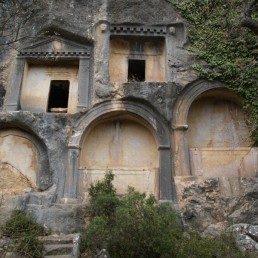
It is hot and humid as hell in most of Texas at the moment. The current conditions call into question whether our normal way of dealing with summer heat (using primarily insulation and air conditioning for cooling) is the only economical and ecological approach to these…

Monument Valley in Dallas?
While in Dallas last week, I took a few minutes to walk from my office to the new Arts District where there are buildings by five Pritzker-Prize-winning architects within sight of each other—Nasher Sculpture Center by Renzo Piano, Meyerson Symphony Center by I.M. Pei, Norman…
Social media for architects: I’m a believer, and here’s why
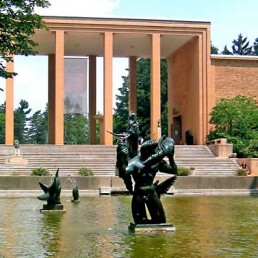
I am privileged to serve on the National Advisory Council at Cranbrook Academy of Art. Cranbrook is truly a place like no other—a stimulating, open environment where art, architecture, and design are taught and explored without boundaries. There's a rich dialogue and a…
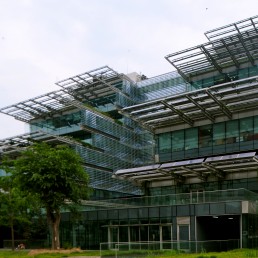
`Environmental Science Building (SIEEB) at Tsinghua University
Designed by the Italian architect, Mario Cucinella, SIEEB is supposed to be one of the "greenest" buildings in China. It incorporates extensive sunshading, natural ventilation, generous daylighting, solar power, rainwater harvesting, wastewater recycling, ecological materials…
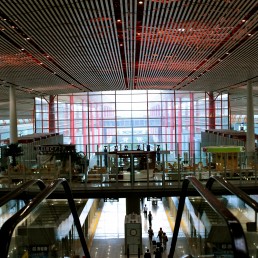
Beijing International Airport
This is massive--supposed to be the largest airport in the world. Oddly, however, it is not monumental, just big. It is relatively easy to navigate given its size, but architecturally it is disappointing. There is not the variation in spaces that is so memorable at Kansai…