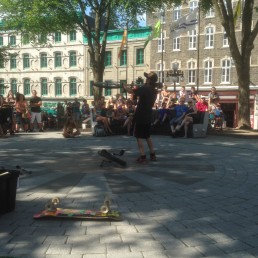
Urban Life and Walking: Pleasures in a Big City
When I travel, I love to just hang out and observe urban life – how cities support the predispositions of their residents and how city dwellers embrace their environments. I’m happy as a clam watching how crowds behave and spying on urban pedestrian life. Such was this case a…

What does the fashion industry share with architecture? Quite a bit…
Several weeks ago, I hosted a reception at my loft in Austin for Jhane Barnes, the very well known fashion designer. I greatly admire her clothing and sense of design and was delighted to have an opportunity to talk with her for a bit before the event. Combing through my…

Architects: Give Credit Where Credit’s Due
I’m always struck by the list of credits in movies. I love the way that everyone who contributes to the success of the film gets acknowledged. Making a building requires the same kind of complex collaborative enterprise as making a movie, yet for some reason, we have this…

Learning From What We Build
In a data-driven world, why don’t we, as architects, gather more data about the performance of our buildings—particularly in the form of post-occupancy evaluations? Wouldn’t it be a potent tool for advocacy of the importance of our profession if we could demonstrate the…
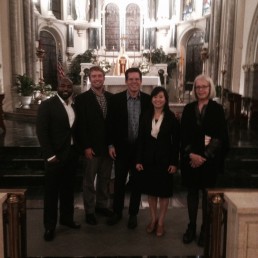
A Crystalizing Moment
I had a crystalizing moment at the Texas Society of Architects convention in Houston last week. On Friday afternoon I attended the recognition ceremony for Newly Registered Architects that was held in a lovely historic church a few blocks from the convention center. I had been…
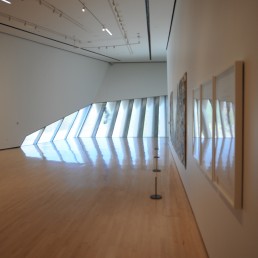
Comparing and Contrasting Two New Museums In Michigan
While in Michigan recently, I paid a visit to two new and strikingly different museums, both designed by well known architects: the Broad Museum by Zaha Hadid at Michigan State University, and the University of Michigan Art Museum by Allied Works. After visiting both, it…
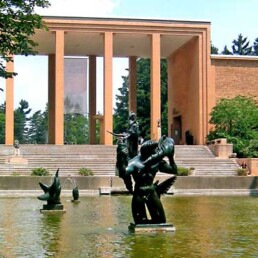
The Rewards of Teaching
I often get as much pleasure and satisfaction from seeing the extraordinary successes of former students as I do from my own endeavors. I was reminded of this a couple weekends ago while attending the National Advisory Council meeting at Cranbrook. Reed Kroloff has been the…
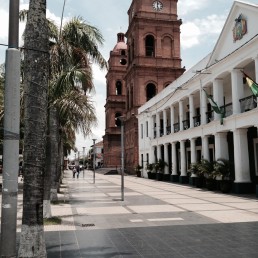
What does global architecture mean?
I recently traveled to Bolivia to participate in the XIII Seminario Internacional de Arquitectura, a biennial architectural conference held at the University of Santa Cruz de la Sierra. I had spoken at the same conference fourteen years ago and, as was the case before, I really…

Our new name: Page
As an architecture and engineering firm, how do you step up your game periodically? In the life of a practice, it's important to take a snapshot and reflect upon various considerations, and that's what we've done in creating the new Page whose name and logo were revealed…
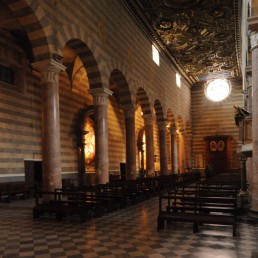
As architects, what can we learn from historic Italian art and architecture? Plenty.
I was in Italy recently, visiting one of my favorite cities, Volterra, in Tuscany. I can't go to Italy without admiring how art and architecture speak to each other there and often integrate beautifully. This is constantly evident in Volterra where the two have a potent and…
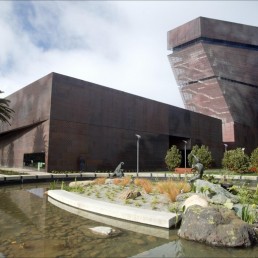
LIVING Architecture
I have made several pilgrimages to the de Young Museum in San Francisco by Herzog and de Meuron--always to stare at the building, wander around and take pictures. Last Saturday I was in SF to see a performance art piece by Sarah Wilson, Derrick Jones and Nehara Kalev that just…
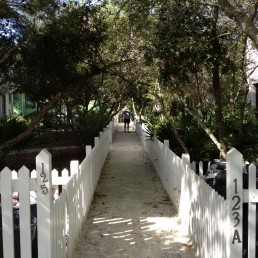
Postmortem on Postmodern
I am convinced that style has very little to do with the real success of buildings. Although we as architects spend a lot of time and energy screaming about “modernism” or “regionalism” or “post-structuralism,” in the end, design genre does not make any guarantee about design…
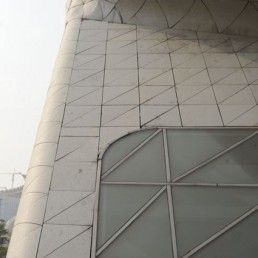
Top Architectural Record Award for Guangzhou Opera House? Really?
Architectural Record recently gave Zaha Hadid’s Guangzhou Opera House its Best Public Project: Honor Award in the Good Design Is Good Business: China competition and published it on the cover.…
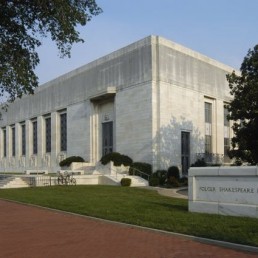
The importance of “glue” in architecture
I had an amazing experience during the AIA National Convention. It wasn’t at the convention itself, where people are running helter- skelter to their CEU sessions, but at a dinner hosted by Gilbert and Suzanne Mathews Friday night at the Folger-Shakespeare Library a few blocks…
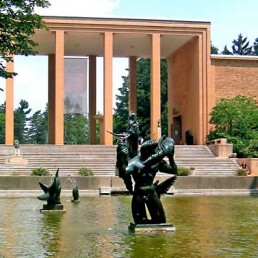
Social media for architects: I’m a believer, and here’s why
I am privileged to serve on the National Advisory Council at Cranbrook Academy of Art. Cranbrook is truly a place like no other—a stimulating, open environment where art, architecture, and design are taught and explored without boundaries. There's a rich dialogue and a…
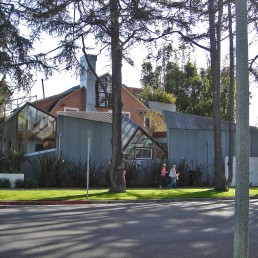
What does the AIA Twenty-five Year Award say about our values as architects?
Reflecting on the past two winners of the AIA Twenty-five Year Award, I am moved to ask what this award says about our values as architects. This is supposed to be the quintessential award that says a building is cool and has stood the test of time as an embodiment of…
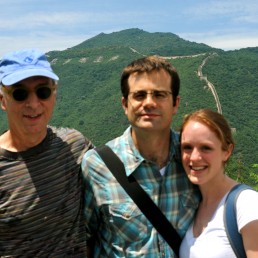
Traveling with Sloan and Kate
One of the best parts of the trip to China was the opportunity to see these things with my son, Sloan and his girlfriend, Kate. Sloan's background in history and law and Kate's background in anthropology complemented my own background in architecture. They are really smart,…