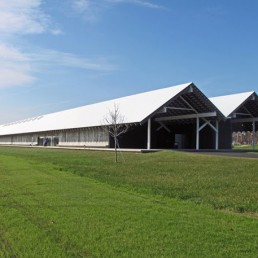
Less is so much more: the Parrish Art Museum
Over the holidays I visited the new Parrish Art Museum, in Mill Creek on Long Island. The museum, which opened a couple months ago, has a mind-boggling history. In 2006, Swiss architects Herzog & de Meuron unveiled their plans for a series of 30 angular, low-slung…
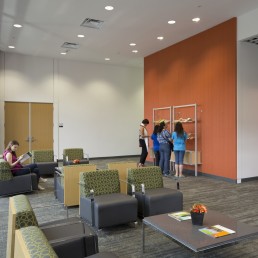
On campus, student life is one big smash-up.
For most of my career, I've been associated with a university in one way or another, much of it at the University of Texas at Austin. Over 35 years, I've observed major changes in the way students go about their routines, how they study, socialize, relax, gather information,…
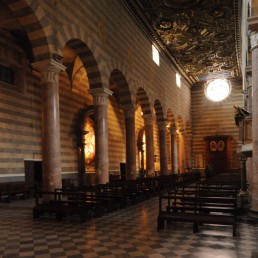
As architects, what can we learn from historic Italian art and architecture? Plenty.
I was in Italy recently, visiting one of my favorite cities, Volterra, in Tuscany. I can't go to Italy without admiring how art and architecture speak to each other there and often integrate beautifully. This is constantly evident in Volterra where the two have a potent and…

High Performing Thermal Mass in New Mexico
Increasingly, I’m more interested in what architecture does than just what it is. In a previous blog, I wrote about the new office building we designed for Wiss, Janney, Elstner Associates (WJE), in Austin, and the use of thermal mass to control temperature. We’ve now…
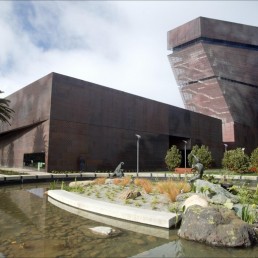
LIVING Architecture
I have made several pilgrimages to the de Young Museum in San Francisco by Herzog and de Meuron--always to stare at the building, wander around and take pictures. Last Saturday I was in SF to see a performance art piece by Sarah Wilson, Derrick Jones and Nehara Kalev that just…
Postmortem on Postmodern
I am convinced that style has very little to do with the real success of buildings. Although we as architects spend a lot of time and energy screaming about “modernism” or “regionalism” or “post-structuralism,” in the end, design genre does not make any guarantee about design…
Top Architectural Record Award for Guangzhou Opera House? Really?
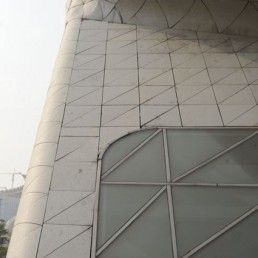
Architectural Record recently gave Zaha Hadid’s Guangzhou Opera House its Best Public Project: Honor Award in the Good Design Is Good Business: China competition and published it on the cover.…
Building With High Thermal Mass in Hot, Humid Climates
It is hot and humid as hell in most of Texas at the moment. The current conditions call into question whether our normal way of dealing with summer heat (using primarily insulation and air conditioning for cooling) is the only economical and ecological approach to these…

Monument Valley in Dallas?
While in Dallas last week, I took a few minutes to walk from my office to the new Arts District where there are buildings by five Pritzker-Prize-winning architects within sight of each other—Nasher Sculpture Center by Renzo Piano, Meyerson Symphony Center by I.M. Pei, Norman…
The importance of “glue” in architecture
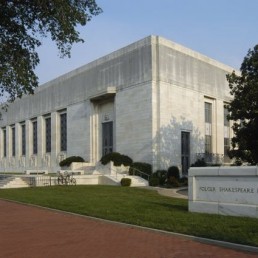
I had an amazing experience during the AIA National Convention. It wasn’t at the convention itself, where people are running helter- skelter to their CEU sessions, but at a dinner hosted by Gilbert and Suzanne Mathews Friday night at the Folger-Shakespeare Library a few blocks…
Social media for architects: I’m a believer, and here’s why
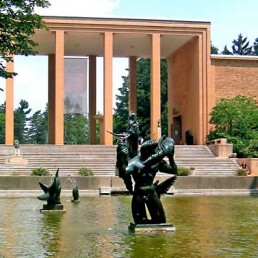
I am privileged to serve on the National Advisory Council at Cranbrook Academy of Art. Cranbrook is truly a place like no other—a stimulating, open environment where art, architecture, and design are taught and explored without boundaries. There's a rich dialogue and a…
What does the AIA Twenty-five Year Award say about our values as architects?
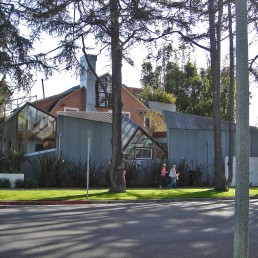
Reflecting on the past two winners of the AIA Twenty-five Year Award, I am moved to ask what this award says about our values as architects. This is supposed to be the quintessential award that says a building is cool and has stood the test of time as an embodiment of…
Forbidden City in Beijing
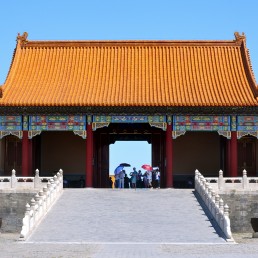
The incredible scale of the Forbidden City is daunting. The central spine contains vast open spaces defined by grand halls and endless arcades. But the Eastern Palaces and Western Palaces on either side are a world apart. There are intimate courtyards and lovely rooms where…
`Environmental Science Building (SIEEB) at Tsinghua University
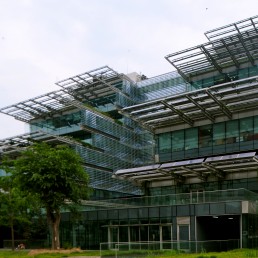
Designed by the Italian architect, Mario Cucinella, SIEEB is supposed to be one of the "greenest" buildings in China. It incorporates extensive sunshading, natural ventilation, generous daylighting, solar power, rainwater harvesting, wastewater recycling, ecological materials…
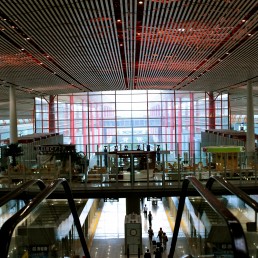
Beijing International Airport
This is massive--supposed to be the largest airport in the world. Oddly, however, it is not monumental, just big. It is relatively easy to navigate given its size, but architecturally it is disappointing. There is not the variation in spaces that is so memorable at Kansai…
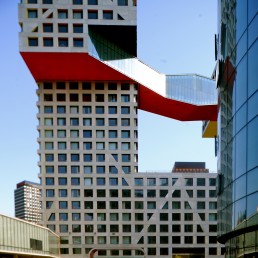
Linked Hybrid by Stephen Holl
This is a whole chunk of the city housing 2500 people in over 700 apartments. It is incredibly ambitious in its notions about public space in residential environments. The complex is essentially a gated community with its back to the surrounding city and its focus on a central…
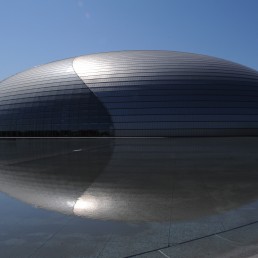
National Grand Theatre by Paul Andreu
A stone's throw from Tiananmen Square, this huge abstract intervention seems to have landed awkwardly in the middle of a bustling city. It defies interaction either with neighboring buildings or pedestrians passing by. The building sets the arts housed inside clearly apart from…
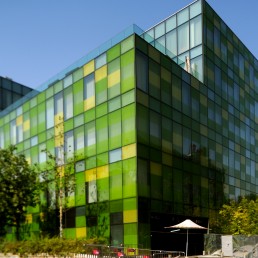
Opposite House by Kengo Kuma
The bright green exterior of Opposite House actually seems right at home in the tree-lined Beijing neighborhood where it is located. The jaw-dropping part of the building is the interior which has dramatic spaces, dazzling light and rich, tactile materials
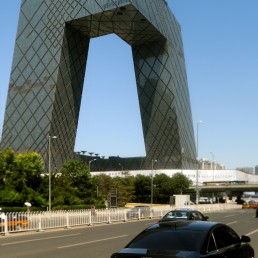
CCTV–Incredible Shape Shifter
CCTV's daring shape definitely grabs attention from anywhere nearby. But the best quality of its shape is the way it morphs and changes as you move around it in the city. In that regard, it reminds me of the Pennzoil Building in Houston by Philip Johnson when it was first…
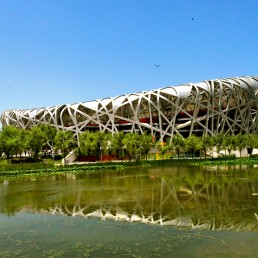
Bird’s Nest and Water Cube
Beijing's Olympic Green was an amazing accomplishment for which the people of the city still feel a great deal of pride. Especially at night in the summer, the place is mobbed with locals just walking around with their families, taking photos, flying kites and watching little…
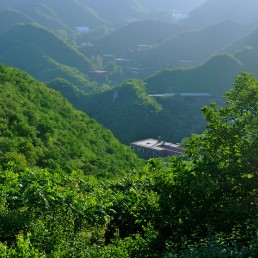
The Commune by the Great Wall
Nestled in the valleys of a beautiful site on the outskirts of Beijing is a group of contemporary houses and a clubhouse designed by 12 outstanding Asian architects. Each house is an individualistic object and they bear little relationship to each other. Although there are…
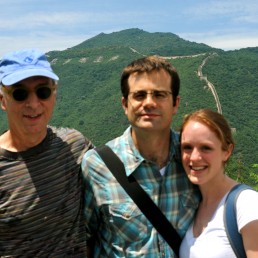
Traveling with Sloan and Kate
One of the best parts of the trip to China was the opportunity to see these things with my son, Sloan and his girlfriend, Kate. Sloan's background in history and law and Kate's background in anthropology complemented my own background in architecture. They are really smart,…
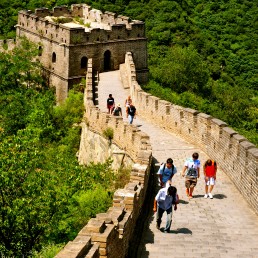
And, of course, The Great Wall
We visited the Mutianyu section of the Great Wall which is more remote and less visited than the Badaling section near Beijing. It was renovated in the 1950s and 1960s and is in an area of magnificent natural beauty.
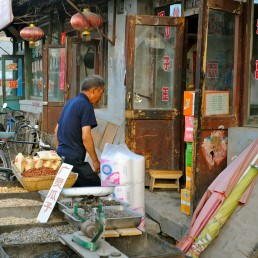
Datong–A Tough Industrial City
Although Datong is a very old city and was a dynastic capital of China two different times, it is now dominated by coal mining and power production. It is not a charming city as a whole, but it is interesting as an example of an "ordinary" Chinese city. There is a…