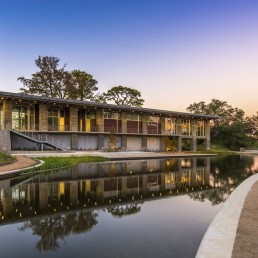
Houston’s Buffalo Bayou: Buildings in Parks
I am a big fan of parks. My local park in Austin is Zilker Park with its famous Barton Springs Pool. There is a beautiful 1940s bathhouse at the pool, designed by Dan Driscoll, an early Texas modernist architect. I often stage my visits to the pool at times that will require a…
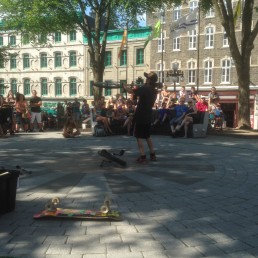
Urban Life and Walking: Pleasures in a Big City
When I travel, I love to just hang out and observe urban life – how cities support the predispositions of their residents and how city dwellers embrace their environments. I’m happy as a clam watching how crowds behave and spying on urban pedestrian life. Such was this case a…
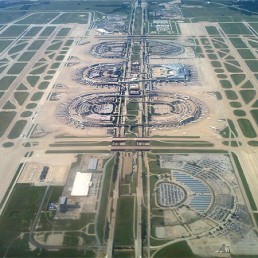
Invisible Resiliency
Recently, I experienced a sort of cosmic convergence of unrelated things happening. First, an 18-year old undergraduate student came to my office to discuss an essay he’s writing about a building of his choosing that he admires. He chose the Dallas Fort Worth Airport (DFW).…
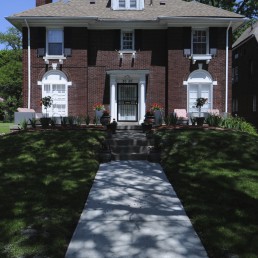
Good design endures in Detroit’s Lafayette Park
I love to revisit significant architectural projects over and over in their mature years to see how they are working and how people are using them. Alvar Aalto was fond of saying he wanted his buildings to be judged by how they looked after 50 years. I think that is a good…
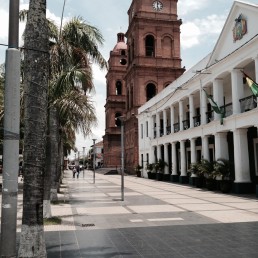
What does global architecture mean?
I recently traveled to Bolivia to participate in the XIII Seminario Internacional de Arquitectura, a biennial architectural conference held at the University of Santa Cruz de la Sierra. I had spoken at the same conference fourteen years ago and, as was the case before, I really…
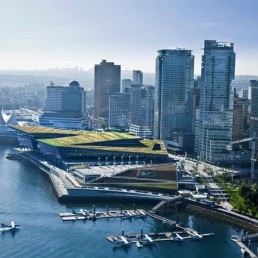
A perfect building? Quite possibly, yes.
This summer I visited Vancouver, certainly one of the most spectacular urban settings in the world. While there, I met with Mark Reddington, partner of LMN Architects of Seattle, and Ken Cretney, chief operating officer for the Vancouver Convention Centre. Ken came on board…
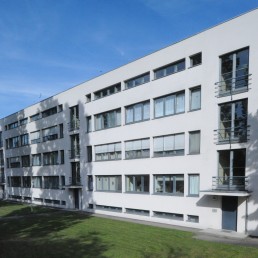
Micro-housing’s time has come … again.
Several years ago, I visited the Weissenhof Estate, an experimental residential complex built on a hillside outside Stuttgart in 1927. Some of the most recognizable names in 20th century architecture were contributors to the buildings and the project’s success, including Le…
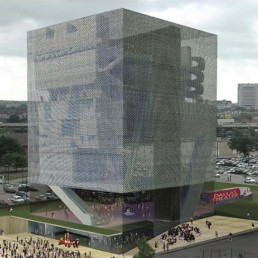
What role for architects in planning future cities?
A recent article by Aaron Betsky in Architect magazine took issue with a New York Times-sponsored program called the Energy For Tomorrow Conference. Betsky was specifically concerned that the Times had not included any "urbanists, planners, or even an architect" but did include…
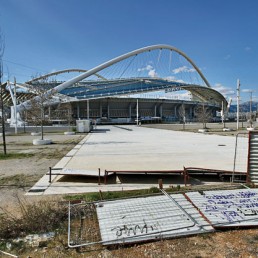
“Creative Invention”… Only for those with gobs of money?
A few lines in Nicholai Ouroussoff’s recent article in The New York Times about the new Parrish Art Museum particularly caught my attention: “The design is a major step down in architectural ambition. It suggests the possibility of a worrying new development in our time of…
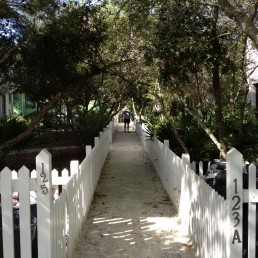
Postmortem on Postmodern
I am convinced that style has very little to do with the real success of buildings. Although we as architects spend a lot of time and energy screaming about “modernism” or “regionalism” or “post-structuralism,” in the end, design genre does not make any guarantee about design…

Monument Valley in Dallas?
While in Dallas last week, I took a few minutes to walk from my office to the new Arts District where there are buildings by five Pritzker-Prize-winning architects within sight of each other—Nasher Sculpture Center by Renzo Piano, Meyerson Symphony Center by I.M. Pei, Norman…
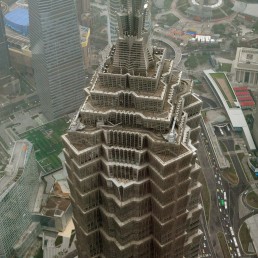
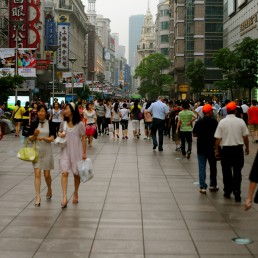
Shanghai Street Scene
We try so hard in American cities to get an active pedestrian street scene to happen. In China, with a billion people and 17 million in Shanghai alone, there never seems to be an issue with action on the street day or night. And, of course, where there are people around, cool…