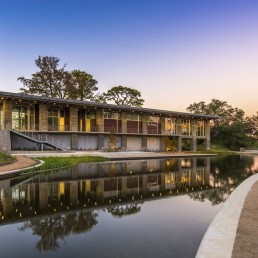
Houston’s Buffalo Bayou: Buildings in Parks
I am a big fan of parks. My local park in Austin is Zilker Park with its famous Barton Springs Pool. There is a beautiful 1940s bathhouse at the pool, designed by Dan Driscoll, an early Texas modernist architect. I often stage my visits to the pool at times that will require a…
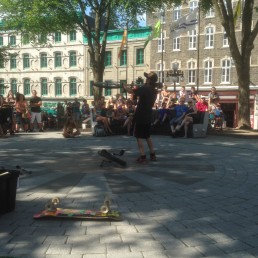
Urban Life and Walking: Pleasures in a Big City
When I travel, I love to just hang out and observe urban life – how cities support the predispositions of their residents and how city dwellers embrace their environments. I’m happy as a clam watching how crowds behave and spying on urban pedestrian life. Such was this case a…

What does the fashion industry share with architecture? Quite a bit…
Several weeks ago, I hosted a reception at my loft in Austin for Jhane Barnes, the very well known fashion designer. I greatly admire her clothing and sense of design and was delighted to have an opportunity to talk with her for a bit before the event. Combing through my…
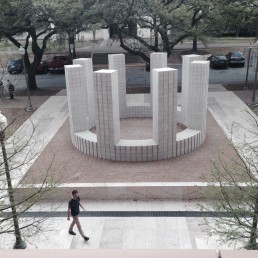
Thoughts on Sol LeWitt: The Visionary and the Makers of His Art
It really irks me when I hear someone talk about some piece of architecture that “rises to the level of art.” Although I have a lot of respect for art, from my modest perspective, architecture operates at a much richer and more complex level. It involves many more people and…
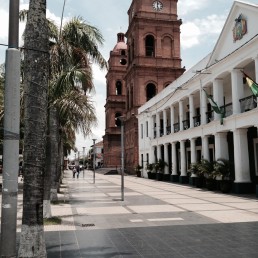
What does global architecture mean?
I recently traveled to Bolivia to participate in the XIII Seminario Internacional de Arquitectura, a biennial architectural conference held at the University of Santa Cruz de la Sierra. I had spoken at the same conference fourteen years ago and, as was the case before, I really…
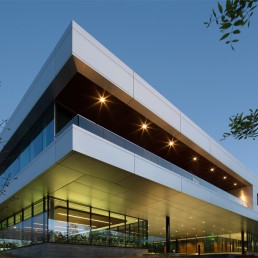
B. L. Harbert International
Having started my career with several construction jobs working for building contractors, I have always had a keen interest in how the construction industry works. The movement to construction management a couple of decades ago has certainly changed the way buildings get built.…
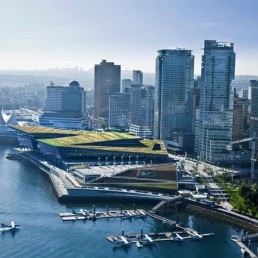
A perfect building? Quite possibly, yes.
This summer I visited Vancouver, certainly one of the most spectacular urban settings in the world. While there, I met with Mark Reddington, partner of LMN Architects of Seattle, and Ken Cretney, chief operating officer for the Vancouver Convention Centre. Ken came on board…
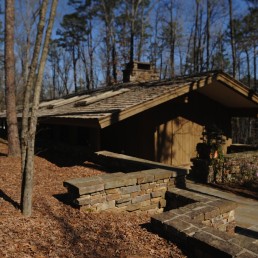
A chapel unites a couple
I recently attended the wedding of two former students that took place at the Anthony Chapel in Hot Springs, Arkansas, designed by Maurice Jennings, a former partner of Fay Jones. The influence of Jones’ celebrated Thorncrown Chapel is evident, but Jennings definitely takes the…
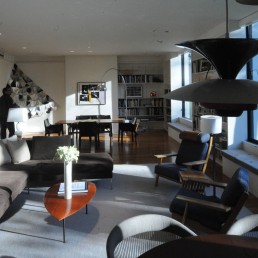
A timeless house in Dallas by Edward Larrabee Barnes
We always seem to be infatuated with newness in Architecture, and I will confess I am susceptible to the quick rush of novelty more than I would like to admit. But I am also a great admirer of timelessness—that far more potent elixir that lends Architecture an enduring depth…
“Creative Invention”… Only for those with gobs of money?
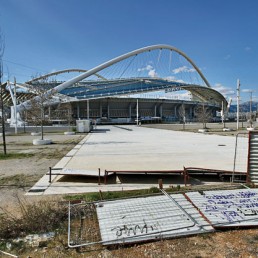
A few lines in Nicholai Ouroussoff’s recent article in The New York Times about the new Parrish Art Museum particularly caught my attention: “The design is a major step down in architectural ambition. It suggests the possibility of a worrying new development in our time of…
Less is so much more: the Parrish Art Museum
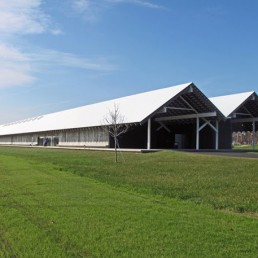
Over the holidays I visited the new Parrish Art Museum, in Mill Creek on Long Island. The museum, which opened a couple months ago, has a mind-boggling history. In 2006, Swiss architects Herzog & de Meuron unveiled their plans for a series of 30 angular, low-slung…
As architects, what can we learn from historic Italian art and architecture? Plenty.
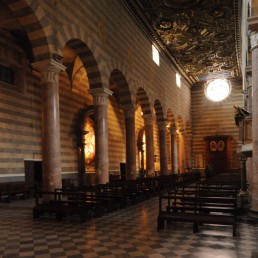
I was in Italy recently, visiting one of my favorite cities, Volterra, in Tuscany. I can't go to Italy without admiring how art and architecture speak to each other there and often integrate beautifully. This is constantly evident in Volterra where the two have a potent and…
LIVING Architecture
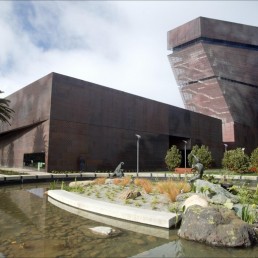
I have made several pilgrimages to the de Young Museum in San Francisco by Herzog and de Meuron--always to stare at the building, wander around and take pictures. Last Saturday I was in SF to see a performance art piece by Sarah Wilson, Derrick Jones and Nehara Kalev that just…
Postmortem on Postmodern
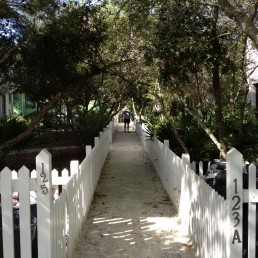
I am convinced that style has very little to do with the real success of buildings. Although we as architects spend a lot of time and energy screaming about “modernism” or “regionalism” or “post-structuralism,” in the end, design genre does not make any guarantee about design…
Forbidden City in Beijing
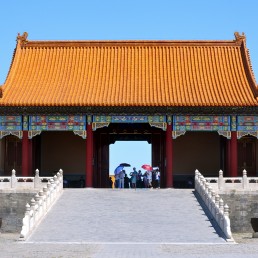
The incredible scale of the Forbidden City is daunting. The central spine contains vast open spaces defined by grand halls and endless arcades. But the Eastern Palaces and Western Palaces on either side are a world apart. There are intimate courtyards and lovely rooms where…
Bird’s Nest and Water Cube
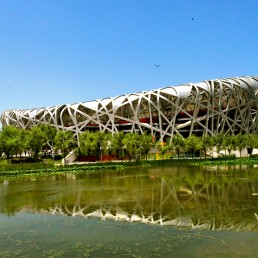
Beijing's Olympic Green was an amazing accomplishment for which the people of the city still feel a great deal of pride. Especially at night in the summer, the place is mobbed with locals just walking around with their families, taking photos, flying kites and watching little…
And, of course, The Great Wall
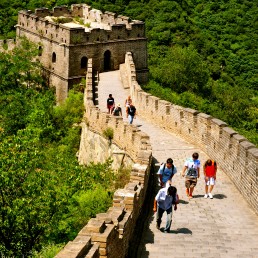
We visited the Mutianyu section of the Great Wall which is more remote and less visited than the Badaling section near Beijing. It was renovated in the 1950s and 1960s and is in an area of magnificent natural beauty.

Datong–A Tough Industrial City
Although Datong is a very old city and was a dynastic capital of China two different times, it is now dominated by coal mining and power production. It is not a charming city as a whole, but it is interesting as an example of an "ordinary" Chinese city. There is a…
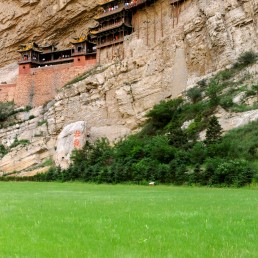
Temple Hanging from a Cliff
This 1400-year-old temple contains statues of Confucian, Buddhist and Daoist gods in stone, iron and bronze. Many temples in China are similarly ecumenical, bringing together the 3 major religions of the country. The temple was located at a critical pass on a trade route. It…
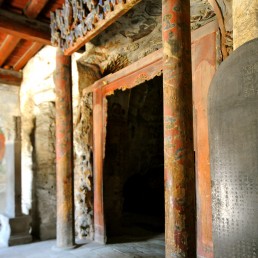
Yungang Caves–Architecture by Subtraction rather than Addition
I have long been fascinated by buildings created by carving out a void rather than by building a solid form. I love the rock cut temple at Carli in India and the whole cities carved in the sides of the hills in Cappadocia in central Turkey. But the very best version of this…
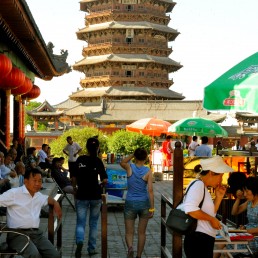
Mu Ta Wooden Pagoda
It blows me away that this pagoda was built in the 11th century and was constructed with no nails. It is one of the oldest wooden buildings in the world, and yet huge and magnificently ambitious. It is in a small town between Taiyuan and Datong--just all by itself in an…
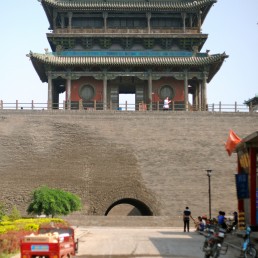
Ancient Walled City of Pingyao
Surrounded by one of China's few intact city walls, dating from 1370, Pingyao is a treasure trove of Ming and Qing architecture. It was an affluent banking center beginning in the 15th century. When the Qing dynasty defaulted on its loans and abdicated in the early 20th…

Chinese Open Air Markets
In the Muslim Quarter in Xian there is an amazing night market that is bustling with people, food and activity. It is clearly the social heart of an ancient and cohesive neighborhood. The street market weaves into a narrow bazaar that could be in Istanbul and finally up to the…
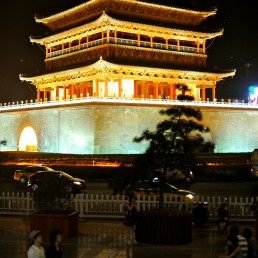
Ming Dynasty Artifacts in Xian
Once the largest city in the world, Xian has been the capital of China for over 4000 years of its history. There are artifacts from many periods of Chinese development. In the central city, however, there are beautifully preserved relics that date back to the 14th and 15th…
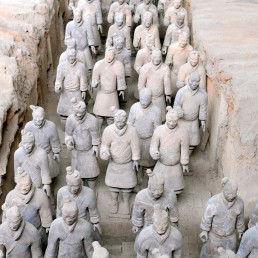
Terra Cotta Warriors and Han Dynasty Tombs
Images of the Terra Cotta Warriors makes almost anyone want to travel to China. Created over 2200 years ago and buried until a farmer discovered them in 1974, these vast excavations definitely live up to expectations. The objects are beautiful. The story of a great leader…